
北齊(公元550—577年)貼金彩繪 石雕佛立像 通高110cm 圓雕 石灰石質圓雕立像,石灰石質。
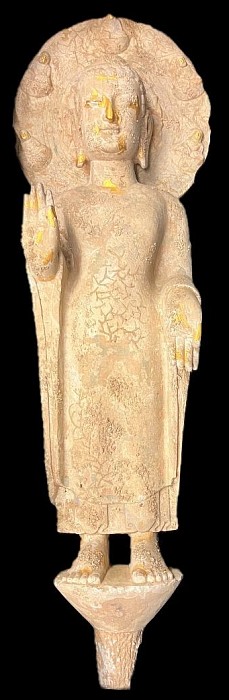
完整保存的北齊貼金彩繪石佛A Completely Preserved Gold-pasted and Painted Stone Buddha of the Northern Qi Dynasty
北齊貼金彩繪石雕佛立像,藝術風貌獨特,蘊含著濃厚的「青州風格」。青州,地處山東半島,歷史淵源可以追溯到7000年前,曾經是中國古代九州之一。古青州地區的佛教造像被業界稱為「青州風格」,是北朝晚期佛教造像的突出代表。北齊雖僅存在了28年,但在佛教藝術史上卻意義重大。北齊青州地區造像的特色是許多造像還保留彩繪和描金,將繪畫技藝施於石雕造像的佛像身上,使繪畫與雕塑兩大藝術緊密契合,形成一種獨特的佛教藝術呈現創作。
The standing Buddha statues painted in gold and painted stone in the Northern Qi Dynasty have a unique artistic style and a strong "Qingzhou style". Qingzhou, located on the Shandong Peninsula, has a history dating back 7,000 years and was once one of the Kyushu states in ancient China. The Buddhist statues in the ancient Qingzhou area are called "Qingzhou style" by the industry, and they are outstanding representatives of Buddhist statues in the late Northern Dynasties. Although the Northern Qi Dynasty only existed for 28 years, it is of great significance in the history of Buddhist art. The characteristic of statues in Qingzhou area of Northern Qi Dynasty is that many statues still retain color painting and gold painting, and apply painting skills to stone Buddha statues, so that the two major arts of painting and sculpture are closely matched, forming a unique presentation of Buddhist art.
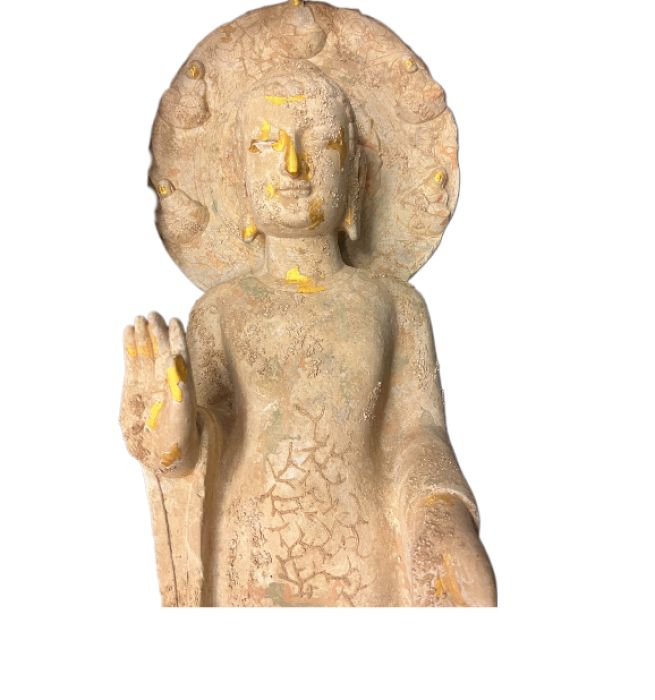
螺發,肉髻微凸,眉目清秀,面相端莊祥和,溫柔慈悲,造像其面部、肌膚裸露處貼金。Snail
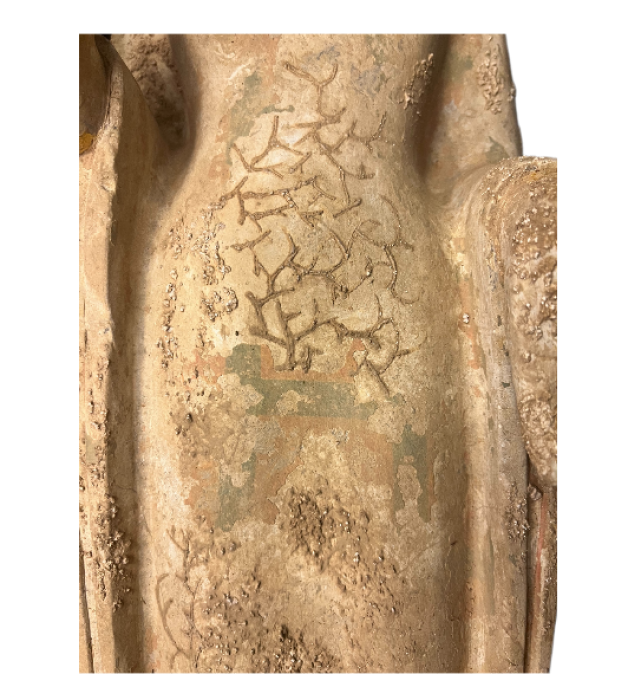
體態修長優美。身披圓領田格紋通肩彩繪袈裟,身著通肩袈裟貼金,下擺層次分明,施無畏與願印Slender and graceful. Wearing a round-neck cassock with a field check pattern and a one-shoulder painted cassock, a one-shoulder cassock pasted with gold, with distinct layers at the hem, and a seal of fearlessness and vows
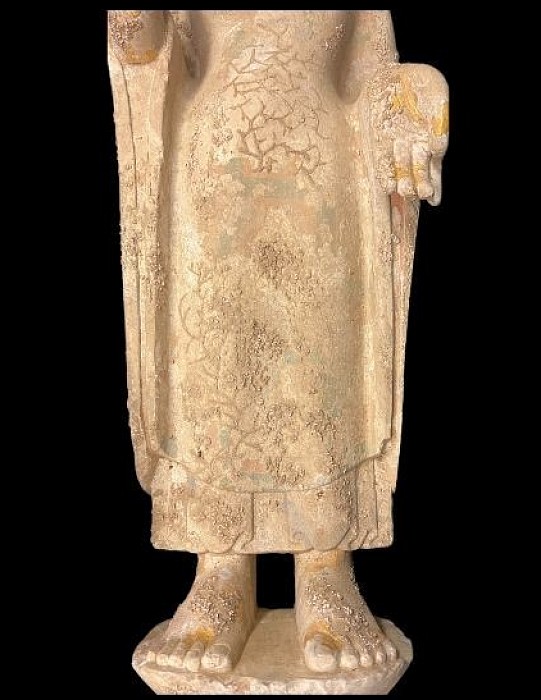
跣足立於蓮台上。給人以高貴、典雅的感覺。Standing on the lotus platform. It gives people a noble and elegant feeling.
清乾隆 胭脂紅地軋道纏枝花卉紋梅瓶
「說瓶罐」中提及:「梅瓶,口細而項(頸)短,肩極寬博,至脛稍狹,折於足則微豐,口徑之小僅與梅之瘦骨相稱,故名梅瓶也,宋瓶雅好作此式,元明暨清初歷代皆有斯製。」
梅瓶最早見於宋代,本為盛酒器,至明清兩代以後器型穩重,底徑加寬,重心下降,較為穩實,且為陳設瓷。清三代梅瓶造型,不復宋元之修長秀麗,呈肥壯渾厚貌,無論口部、頸部、肩部、底部皆增廣寬度,尤以肩部拱張,全器顯得健碩。此梅瓶造型為乾隆朝典型器。瓶口描以金邊,短頸、豐肩下弛型制,腹部以下漸收斂。外壁通體施以胭脂彩料刻十錦花卉紋。
此瓶呈小口微撇,短束頸,豐肩,長腹下收,圈足。瓶內施松石綠釉,金彩口沿。外壁通體施以均潤的胭脂紅彩,滿飾軋道繪粉彩勾蓮纏枝花卉紋。底壁松石綠釉書藍彩「大清乾隆年製」三行六字篆書款。This bottle is glazed with turquoise green, and the mouth is edged with golden color. The whole body of the outer wall is painted with a uniform carmine color, and the whole decoration is painted with pastel hook lotus winding branches and flower patterns. Bottom turquoise green-glazed blue-coloured inscription "Great Qing Emperor Qianlong Period" seal script inscription in three lines and six characters.
"Shuo Ping Jar" mentioned: "Mei vases have thin mouths and short necks, extremely broad shoulders, narrow to the shin, slightly plump when folded at the feet, and the small diameter is only commensurate with the thin bones of plums. Hence the name plum vase, Song Ping Ya was good at making this style, Yuan, Ming and early Qing dynasties all made Si vases." The plum vase was first seen in the Song Dynasty, and it was originally a wine container. After the Ming and Qing dynasties, the shape of the vase was stable, with a diameter of the bottom. It is widened, the center of gravity is lowered, it is relatively stable, and it is a display porcelain. The shape of plum vases in the third dynasties of the Qing Dynasty is no longer slender and beautiful as in the Song and Yuan Dynasties, but has a plump and thick appearance. The width of the mouth, neck, shoulders, and bottom is increased, and the shoulders are arched, making the whole vessel look strong. The shape of this plum vase is typical of the Qianlong Dynasty. The mouth of the bottle is painted with gold rims, with a short neck, full shoulders and relaxed shape, and gradually converges below the abdomen. The outer wall is engraved with rouge color materials and engraved with ten brocade flower patterns.
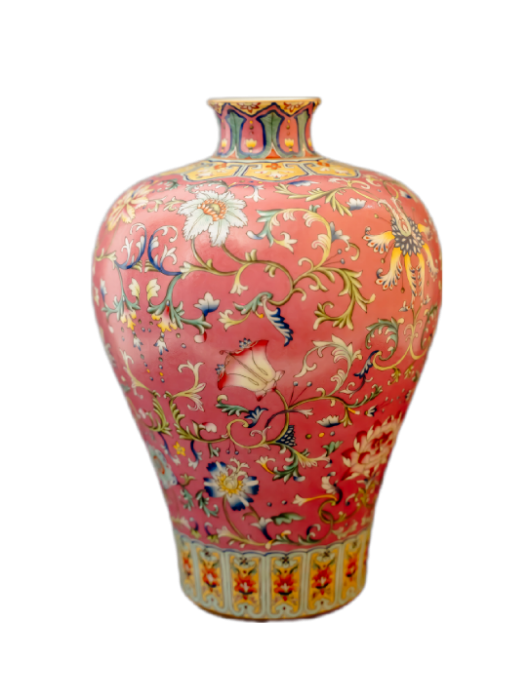
清 花卉纏枝蓮紋瓶(乾隆年制)
清 描金蝴蝶花卉插瓶(款:乾隆年制)
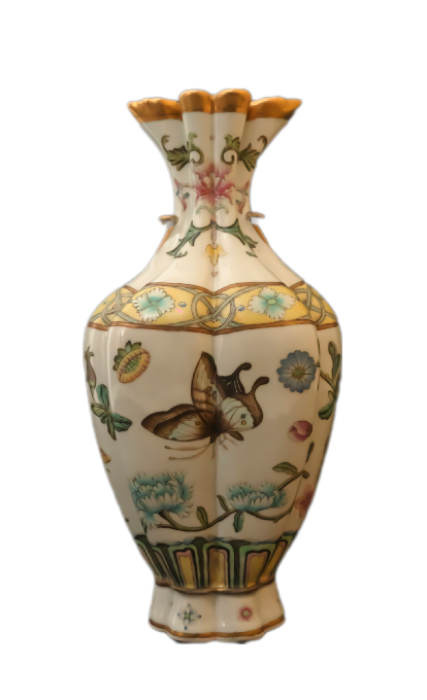
描金蝴蝶花卉瓶(乾隆年制)
此粉彩瓶繪製精細的蝴蝶翩翩飛舞穿梭在花卉間飛舞,生動美麗,活靈活現,瓶口描金形如花朵,整體端美景緻,印款:乾隆年制。
This famille rose bottle is exquisitely drawn with butterflies flying among the flowers, vivid and beautiful, vivid, the bottle mouth is painted in gold to look like flowers, and the overall view is beautiful. Printed: Qianlong year system.
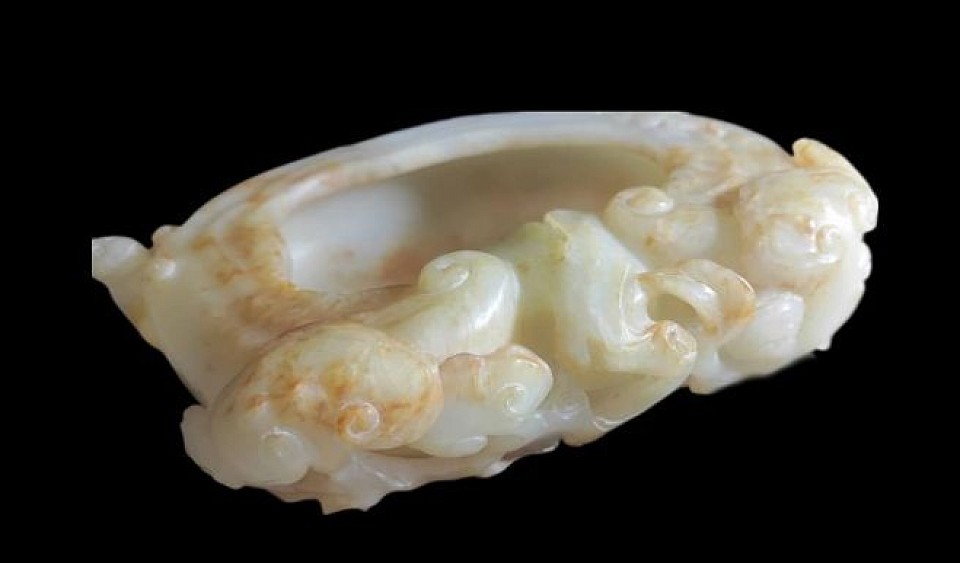
清 和田白玉 靈猴獻壽大筆洗
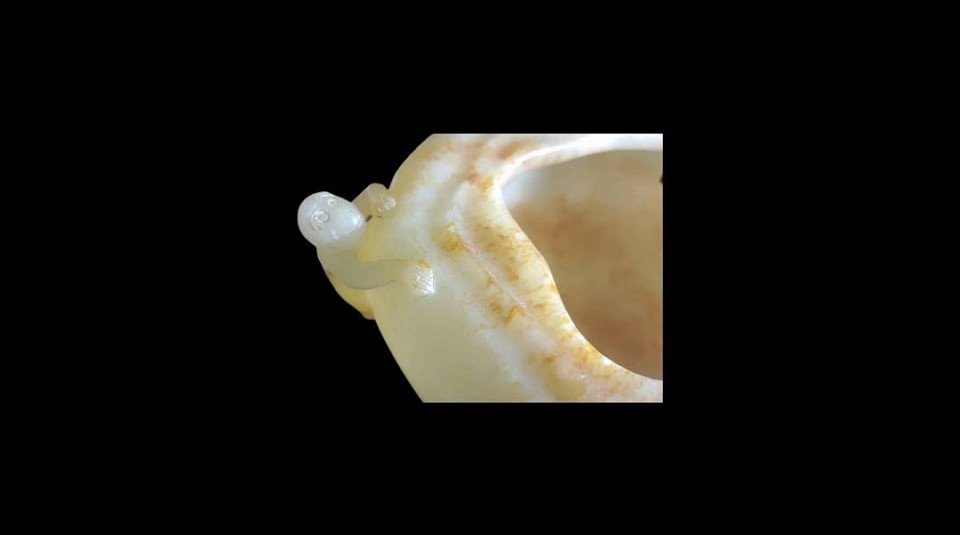
栩栩如生靈動的猴子
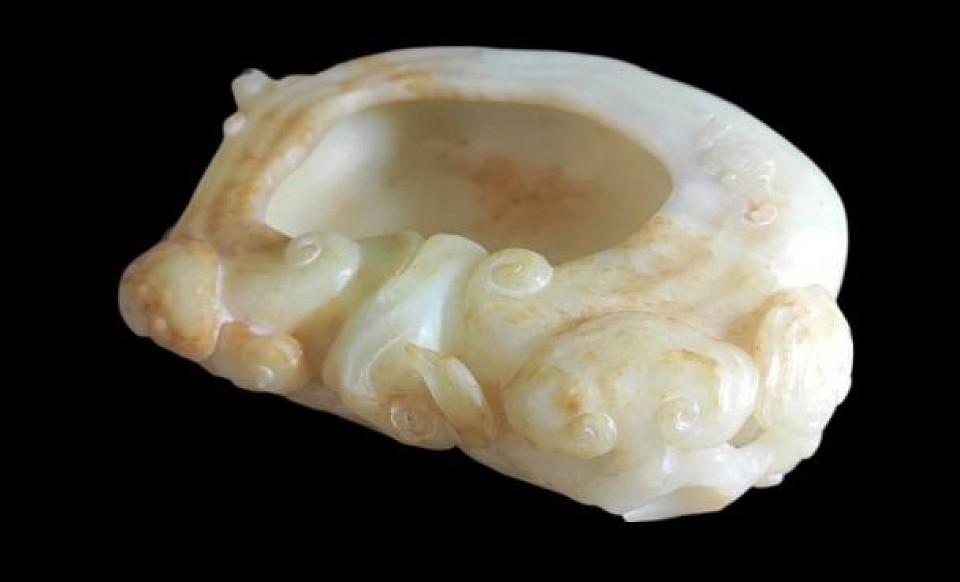
整體雕刻細膩大氣
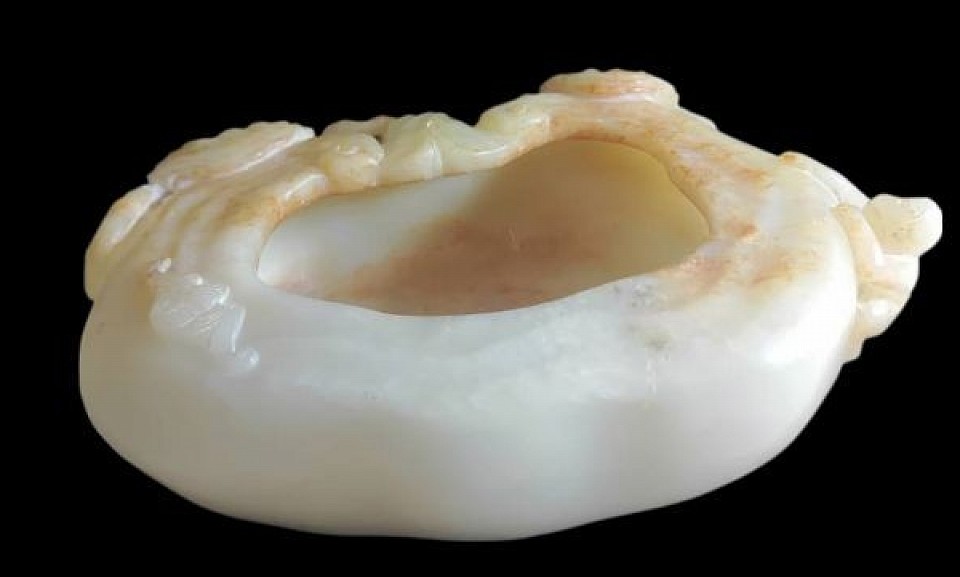
玉質細緻凝白
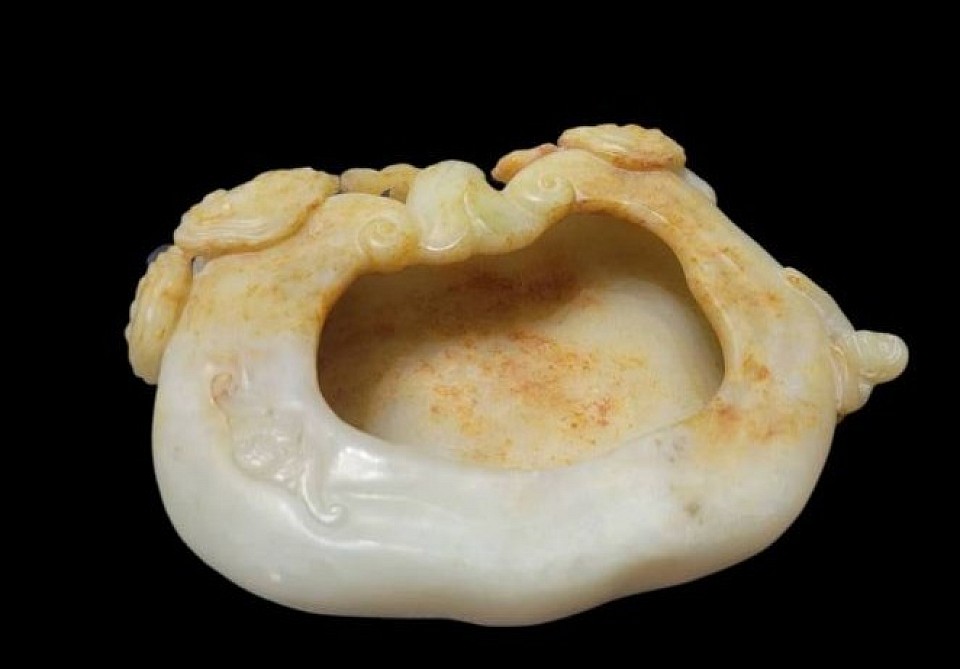
帶棗金皮的和田玉
白玉靈猴獻壽紋洗鑒賞
清 和田白玉雕刻筆洗(附證書),長19公分、寬14公分、高5.5公分。以優質的和闐白玉雕琢而成,玉質溫潤細膩,光澤瑩潤 ,帶棗皮。整器近似橢圓,一靈猴栩栩如生,攀附在玉洗口沿。延邊精細雕刻著獻瑞祝壽的紋飾,整體雕工精美大氣。
談起玉洗,首先想到的是文房用具中的玉筆洗。明代高濂曾在《遵生八箋》中描述筆洗的功用:「筆書後即入筆洗中,滌去滯墨,則毫堅不脆,可奈久用。」故可見筆洗是用來存水以洗筆上餘墨殘留的器皿,筆用完即洗,可保護筆毫。一般為敞口,是文房用具中除筆、墨、紙、硯四寶外十分重要且常見的用具。
玉材本就是不可多得的世間珍品,古人也常將最珍貴的器物以玉來製作,因而,玉洗較其他質地的洗更顯高貴。而玉洗的製作,大多取材來至田園自然景色、花卉、人物、動物等,或許這種將大自然和生活的情趣納入文人書房,正與文人追求閒逸的心願相吻合,成為文人雅士、帝王貴胄均十分喜愛的藝術珍品。Appreciation of the White Jade Monkey's Longevity Pattern Wash, Qing Dynasty White Jade Carving Brush Wash (with certificate), 19 cm long, 14 cm wide, and 5.5 cm high. Carved from high-quality Khotan white jade, the jade is warm and delicate, with a lustrous luster and jujube skin. The whole vessel is approximately oval, with a lifelike monkey clinging to the rim of the jade wash. Yanbian is finely carved with patterns of offering auspiciousness and celebrating birthdays, and the overall carving is exquisite and grand. When talking about jade washers, the first thing that comes to mind is the jade brush washers used in stationery. Gao Lian of the Ming Dynasty once described the function of the brush washer in "Eight Notes of Zunsheng": "After the pen is written, it is put into the brush washer to wash away the stagnant ink, so that it is not strong and brittle, and can be used for a long time." Therefore, it can be seen that the brush washer is used to store water. Use the utensils to wash the remaining ink on the pen. Wash the pen immediately after use to protect the pen. Generally open, it is a very important and common utensil in the study room besides the four treasures of pen, ink, paper and inkstone. Jade is a rare treasure in the world. The ancients often used jade to make their most precious objects. Therefore, jade washers are more noble than washers of other textures. Most of the materials used in the production of jade washers come from pastoral natural scenery, flowers, people, animals, etc. Perhaps this kind of incorporating the taste of nature and life into the literati's study is consistent with the literati's desire to pursue leisure, and has become a literati, refined scholar, It is an art treasure that is loved by emperors and nobles.